
How to Choose Bathroom Faucets for Your Sink and Space
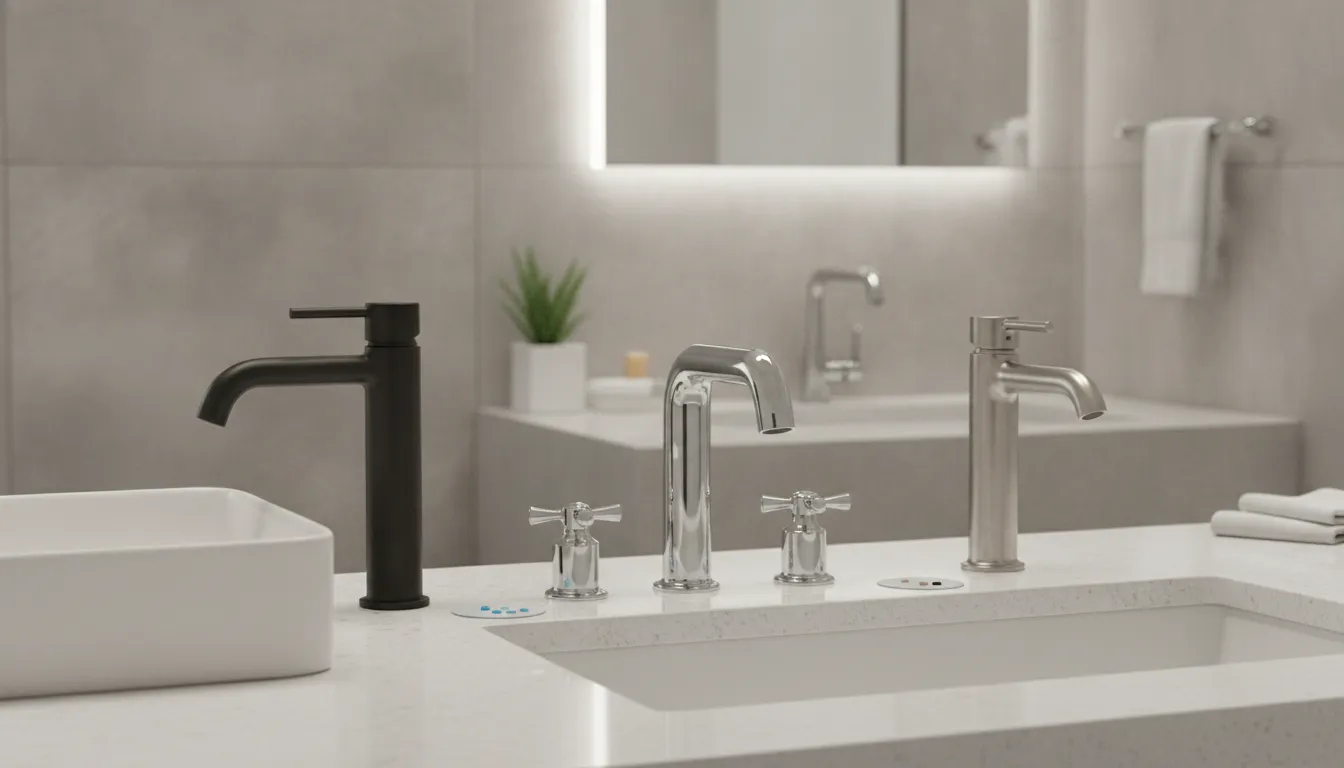
A faucet may be one of the smallest fixtures in your bathroom, but it has a big job. It should fit your sink, feel comfortable to operate, and complement the room without creating extra installation work. When comparing bathroom faucets, start with practical details: mounting holes, handle clearance, spout reach, and plumbing connections. Then consider appearance, water efficiency, cleaning needs, and warranty coverage. These details can help you find a faucet that works well beyond the showroom. Whether you’re making a simple replacement or planning a larger bathroom update, this guide will help you compare options and identify what to check before you purchase.
Key Takeaways
- Check fit before you shop: Match the faucet’s mounting style and hole spacing to your sink, then compare spout height, reach, and plumbing connections.
- Choose for daily use and bathroom style: Weigh handle comfort, finish care, water efficiency, safety features, and warranty details for the exact model.
- Plan installation with the rest of your remodel: Confirm included parts and potential plumbing changes early, and coordinate your faucet with the sink and vanity through HomeSource247’s bathroom remodeling team.
Which Bathroom Faucet Type Should You Choose?
Start with your sink and countertop, not just the faucet’s appearance. The number and spacing of the faucet holes, the room around the basin, and the needs of the people using the bathroom all affect which type will work best. Check your sink’s specifications and measure the available space before you shop.
Compare Single-Handle and Two-Handle Faucets
A single-handle faucet uses one control to adjust water flow and temperature. It’s a straightforward choice for a compact counter and lets you make adjustments with one hand. A two-handle faucet has separate controls for hot and cold water. It can complement a traditional bathroom, though it generally needs more room and may take a little more adjustment to reach your preferred temperature.
Think about who uses the sink and how they use it. If ease of operation matters most, a single handle may be a comfortable fit. If you prefer separate controls or a classic look, consider two handles. Both configurations come in a range of designs, as you can see in American Standard’s bathroom faucet collection. Confirm the faucet’s hole requirements before choosing, since the handle configuration affects how it installs.
Choose a Mount: Single-Hole, Centerset, Widespread, or Wall-Mounted
Your sink’s faucet holes are a useful starting point. A single-hole faucet fits a one-hole setup. A centerset model usually combines the spout and handles on one base, designed for holes spaced four inches apart. Widespread faucets have separate components and typically fit holes spaced eight inches apart or more. Exact spacing varies by model, so check the product specifications.
Wall-mounted faucets attach to the wall above the sink, rather than to the countertop. They can leave more counter space clear, but require compatible plumbing inside the wall. This option is often simpler to plan during a bathroom renovation than as a direct faucet swap. Compare the mounting options in American Standard’s collection, then measure your sink or countertop’s hole count and spacing. If your sink has extra holes, check whether the faucet includes a deck plate to cover them.
Compare Lever and Cross Handles
Handle shape affects the faucet’s look and how comfortable it is to operate. Lever handles move up, down, or sideways, depending on the design. Their shape can be easier to use if you prefer not to grip and twist a small control, and they suit a wide range of bathroom styles.
Cross handles have a more traditional appearance and can work well in vintage-inspired spaces. They may require a firmer grip, so consider the needs of everyone who uses the sink. Handle options vary by faucet model, and some collections include both lever and cross designs. Browse American Standard’s available faucet styles and compare the controls in person if possible. Whichever shape you choose, leave enough room around the faucet for handles to turn without bumping a wall, mirror, or backsplash.
Match Faucet Height and Spout Reach to Your Sink
Faucet height and spout reach determine where water lands in the basin and how much room you have beneath the spout. A faucet that sits too low may make handwashing awkward, while a spout that reaches too far can direct water toward the basin’s front edge. Compare the faucet’s measurements with your sink’s depth, shape, and position of the drain.
A taller faucet may suit a vessel sink, while a lower profile can work well with a shallow or compact basin. Check handle clearance, too, especially if the faucet will sit near a wall or backsplash. Browse a range of Moen bathroom faucet styles and compare the specifications for each model. If you’re replacing the sink or planning a larger update, choose the faucet and basin together. HomeSource247’s bathroom remodeling team can help coordinate those choices during a renovation.
Which Faucet Style and Finish Fit Your Bathroom?
A bathroom faucet is a small fixture with a noticeable effect on the room’s overall look. Its shape, finish, and scale can complement your vanity and sink, or feel out of place beside them. Before choosing a model, take stock of the details you already have, including cabinet hardware, lighting, shower trim, and countertop color. Decide whether you want the faucet to blend in or serve as a focal point.
Then consider the practical side. A finish that looks striking in a product photo may need more frequent wiping in a busy bathroom. The faucet also has to fit your sink’s hole configuration and basin dimensions. If you’re updating a vanity or changing the sink, you’ll have more flexibility to choose a faucet style and mounting type that work together. If you’re replacing the faucet alone, the sink’s existing holes will help narrow the options.
It can help to compare faucets in person or request finish samples, then view them in your bathroom’s lighting. Look beyond the product photo, too: review care instructions, installation requirements, and warranty details. The sections below cover the main style and finish choices, so you can find an option that suits your bathroom and everyday routine.
Compare Traditional, Modern, and Transitional Designs
Traditional faucets often have curved spouts, decorative handles, or other classic details. They can complement furniture-style vanities and bathrooms with ornate mirrors or traditional tile. Modern designs typically use clean lines and simple shapes, making them a good match for streamlined cabinets and contemporary finishes. Transitional faucets bridge the two styles, pairing familiar curves with restrained details.
Use the rest of the room as your guide. A faucet does not have to match every feature, but its shape should feel intentional beside the vanity, mirror, and lighting. If you’re unsure, compare a few options with similar proportions and notice which one fits the room best. American Standard’s bathroom faucet collection includes traditional, modern, and transitional designs, making it easier to compare styles.
Consider Chrome, Brushed Nickel, Matte Black, and Bronze
Chrome has a bright, reflective appearance that suits many bathroom styles. Brushed nickel looks softer and more muted, while matte black makes a strong contrast against light sinks and countertops. Bronze adds warmth and can work well with wood tones, traditional details, or earthy colors. The right finish depends on the look you want and the other materials in the room.
Compare finishes near the sink and vanity, ideally in your bathroom’s lighting. Product photos can look different from the actual finish, and names may vary by manufacturer. Check the specific model details before you buy, especially if you’re coordinating the faucet with shower trim or cabinet hardware. American Standard’s faucet range shows how finish options can vary by design.
Compare Durability, Water-Spot Visibility, and Cleaning Needs
Finishes differ in how they show water spots, fingerprints, and everyday residue. Reflective surfaces can make marks more noticeable, while brushed finishes may soften their appearance. Matte finishes have a distinct look, but water residue and smudges can still show, depending on the product and your bathroom’s water. Check the manufacturer’s cleaning instructions before choosing, and use products approved for that finish.
For a faucet that will see frequent use, review its construction, warranty, and access to replacement parts. These details matter alongside appearance, especially in a household where the sink gets used throughout the day. Cleaning requirements also vary by model, so avoid assuming that all finishes need the same care. Moen’s bathroom faucet collection provides product information to help you compare available styles and finishes.
Coordinate Your Faucet with Your Sink and Other Fixtures
First, confirm that the faucet will fit your sink. Check the number of mounting holes and the distance between them, then match those measurements to the faucet’s configuration. Compare the faucet’s height and spout reach with the basin, too. Water should flow into a useful spot without making the sink awkward to use or causing excess splashing.
Next, consider how the faucet will look beside cabinet hardware, shower trim, towel bars, and lighting. Matching finishes can create a consistent look, while a deliberate mix can add contrast. For example, you might pair a dark faucet with lighter cabinet pulls, as long as the combination feels balanced. If you’re updating the vanity or other fixtures at the same time, plan those choices together as part of your bathroom remodeling project.
Which Water-Efficiency and Convenience Features Matter?
A bathroom faucet should suit the people who use it, conserve water without feeling underpowered, and make daily routines easier. Compare its flow rate, safety and control features, ease of use, and long-term maintenance needs. If you’re updating the sink or other fixtures too, discuss faucet options with your bathroom remodeling team.
Check Flow Rate, Aerators, and WaterSense Certification
A faucet’s flow rate measures how much water it delivers per minute. A lower rate can help reduce water use, but make sure the stream still feels comfortable for tasks like washing your hands. Many faucets have an aerator, a small screen at the spout that mixes air into the water to create a steady-feeling stream.
Look for the WaterSense label when comparing models. The EPA’s WaterSense program certifies bathroom faucets that meet its efficiency and performance criteria. WaterSense-labeled faucets have a maximum flow rate of 1.5 gallons per minute. Check the specifications for the exact model you’re considering, since flow rates vary. You can also confirm whether its aerator is removable and easy to clean.
Consider Temperature-Limiting Controls and Touchless Operation
A temperature-limit control lets you set a maximum hot-water range, which can help reduce the risk of scalding. It may be a helpful feature in a home shared by children or older adults. Settings differ by model, so check the product instructions to learn whether you can adjust the limit yourself or need a plumber’s help.
Touchless faucets use a sensor to start and stop the flow when you place your hands beneath the spout. This can be convenient when your hands are messy and may mean less contact with the handle. Check how the faucet gets power: some models use batteries, while others require an electrical connection. Browse Moen’s bathroom faucets to compare available control styles and features.
Compare Ease of Use, Durability, and Replacement-Part Availability
Consider how the faucet will feel to use every day. A single lever may be easier to operate with one hand, while separate handles allow you to adjust hot and cold water independently. If grip or mobility is a concern, try the controls in person when possible, or review the product details before buying.
Also check the faucet’s materials, finish-care instructions, and warranty. Replacement parts such as cartridges and aerators can be useful if a component wears out or needs cleaning. Confirm that parts are available for the specific model, rather than assuming they fit every faucet from the same brand. American Standard’s faucet listings include product details you can review as you compare options.
How Do Bathroom Faucet Brands Compare?
Moen, Delta, and Kohler each offer bathroom faucets in a variety of styles, finishes, and price ranges. The right choice depends less on the brand name and more on how a specific faucet fits your sink, your daily routine, and your budget. Compare features and warranty terms, then check the product specifications for the exact model you’re considering.
Compare Moen, Delta, and Kohler Features and Warranties
Moen offers traditional and contemporary designs, with select faucets featuring hands-free operation. Delta’s range includes practical designs, and some models use replaceable cartridges that can simplify certain repairs. Kohler offers a broad selection of styles and finishes, including faucets with a more refined, design-focused look. Features vary by collection, so compare individual models rather than assuming every faucet from a brand has the same benefits.
Each manufacturer has its own warranty terms, and coverage can depend on the faucet, finish, and original purchaser. Review the Moen warranty, Delta warranty, and Kohler warranty before buying. Check what the warranty covers, how long coverage lasts, and what documentation you’ll need if you request service.
Check Specifications for the Exact Model and Finish
A brand comparison can help you create a shortlist, but the product details determine whether a faucet will work in your bathroom. Confirm the mounting style, number of handles, flow rate, spout height, and reach. Check that the faucet fits your sink’s hole count and spacing, and verify that your preferred finish is available for that exact model. Finish options can differ across faucets within the same collection.
Before purchasing, review the manufacturer’s installation guide and included-parts list. These can tell you whether a drain assembly is included and whether the faucet needs specific connections or tools. If you’re updating more than the faucet, consider how its shape and finish will look alongside your sink, vanity, and other fixtures. HomeSource247’s bathroom remodeling team can help coordinate those choices during a renovation.
How Much Do Bathroom Faucets Cost?
Bathroom faucet prices range from a few dozen dollars for a basic model to several hundred for a designer fixture. The faucet is only one part of your budget: installation, extra parts, and plumbing adjustments can add to the total. Check your sink setup and compare features before you settle on a price range.
Compare Prices by Mount and Handle Configuration
Bathroom sink faucets often cost about $25 to $90 for standard budget-to-midrange models, while luxury and designer options can exceed $350. Mount and handle style affect both price and compatibility. A single-hole faucet usually combines the spout and handle in one unit. Two-handle faucets may use a centerset or widespread mount, depending on the sink.
Before shopping, check the number of holes in your sink and measure the spacing between them. A faucet that doesn’t match may require an adapter, a different sink, or additional work. Browse bathroom sink faucet options by mount and handle style, then compare models that fit your existing setup.
Account for Materials, Finish, Brand, and Features
The faucet’s material, finish, brand, and features can all influence its price. For example, American Standard’s faucet collection lists models from $101.40 for a 4-inch centerset faucet to $396.50 for a widespread design. Prices vary by collection and model, so use the specific faucet listing to compare costs.
A finish such as chrome, brushed nickel, matte black, or bronze may also affect the price. Think about how it will coordinate with your other fixtures and how much cleaning it may need. Water-efficient designs and other added features can change the cost as well. Review the specifications to see what each model offers, then decide which features are worth paying for.
Budget for Installation, Parts, and Plumbing Changes
Check what’s included before you buy. Some faucets require separate parts, such as a drain assembly or supply lines. Review the product details and installation instructions, and use Moen’s bathroom faucet listings to check the included components for a specific model.
Installation costs depend on the faucet type and your existing plumbing. Replacing a faucet with one that matches your current mount may be relatively simple. Changing the sink configuration or installing a wall-mounted faucet can require more extensive plumbing work. If you’re planning a bathroom update, discuss your faucet and sink choices early. HomeSource247’s bathroom remodeling services bring design and installation together, making it easier to plan fixture choices alongside the rest of your space.
What Should You Check Before Buying a Bathroom Faucet?
A faucet should fit your sink and plumbing, not just your bathroom’s style. Before you buy, check the sink’s mounting holes, measure the space around the basin, and review what comes with the faucet. A few minutes spent confirming these details can help you avoid unexpected parts or installation changes.
Confirm Sink Hole Count, Spacing, and Drain Assembly Needs
Check how many holes your sink or countertop has and measure the distance between them. A single-hole faucet needs one opening, while centerset and widespread faucets use multiple holes with different spacing. The American Standard faucet guide describes common configurations, including single-hole, 4-inch centerset, and 8-inch widespread models.
Next, confirm whether the faucet includes a drain assembly and whether it suits your sink. Some drains connect to a lift rod behind the faucet; others use a push-button or separate mechanism. If you’re replacing a faucet, choosing one that matches the existing hole layout may simplify the work. A different configuration could require changes to the sink or countertop.
Check Faucet Clearance, Supply-Line Fit, and Shutoff Access
Measure the area around your sink before selecting a faucet. Leave enough room for the handle to move without hitting a wall, backsplash, or mirror. Check that the spout reaches over the basin and directs water into the bowl. A high spout can provide more space for washing, but may cause splashing in a shallow sink.
Look under the sink to locate the hot- and cold-water shutoff valves. Confirm that the faucet’s supply lines can reach the valves without stretching or bending sharply, and make sure the valves are accessible. Review the product specifications for installation requirements, since some models need parts that are sold separately. For example, Moen’s faucet listings note that additional installation parts may be required for some products.
Review Warranty Terms, Maintenance Needs, and Included Parts
Read the warranty for the exact faucet model and finish you plan to buy. Check how long coverage lasts and whether it applies to the faucet’s parts, finish, or both. Warranty terms can vary between models, even within the same brand, so review the product details rather than relying on general brand information.
Think about cleaning and upkeep, too. Some finishes show water spots and fingerprints more readily than others. Follow the manufacturer’s care instructions to help protect the finish. Before checkout, confirm whether the package includes a drain assembly, supply lines, mounting hardware, and any tools needed for installation. If you’re planning a larger update, HomeSource247’s bathroom remodeling team can help coordinate your faucet choice with the sink, plumbing, and rest of the renovation.
What Should You Plan for Faucet Installation?
A faucet should fit your sink, connect to your plumbing, and suit the way you use your bathroom. Check these details before buying, especially if your remodel includes a new sink, vanity, or countertop. Planning ahead helps you catch fit or plumbing issues while there’s still time to adjust the design.
Verify Plumbing Connections and Required Installation Parts
Check the sink or countertop’s hole count and spacing, then compare them with the faucet’s specifications. Make sure the supply lines and shutoff valves can connect to the new fixture. Faucet supply lines come in different sizes and connection types, so reviewing common supply-line fittings can help you know what to confirm.
Look at the faucet’s included parts, too. You may need separate supply lines, a drain assembly, plumber’s tape, or silicone caulk, depending on the faucet and sink. If you’re not sure whether your existing connections will work, have an installer check before the scheduled work. That way, you can identify any needed parts or plumbing adjustments in advance.
Plan for In-Wall Plumbing with Wall-Mounted Faucets
Wall-mounted faucets need plumbing connections inside the wall, so their placement takes careful planning. Check that the spout will line up with the sink, reach far enough into the basin, and leave comfortable space for washing your hands. Decide on the faucet location alongside the sink, vanity, and wall design rather than after those choices are set.
Installation may involve opening the wall and changing the plumbing, which can make a wall-mounted faucet a better fit for a larger remodel than a simple fixture swap. A plumbing fixture installation guide covers supply-line connections, but the work for a wall-mounted model can go beyond those steps. Ask a professional to assess the wall and plumbing before choosing this style.
Consider Replacing the Faucet During a Bathroom Remodel
If you’re updating your sink, vanity, or countertop, consider choosing a new faucet at the same time. You can check that its mounting style fits the sink, its height and reach suit the basin, and its finish works with the rest of the room. Planning these elements together can also help identify plumbing changes before installation begins.
Include installation supplies and labor in your budget, not just the faucet’s purchase price. Depending on the fixture and existing setup, the work may require caulk, plumber’s tape, or other materials. Lowe’s faucet installation guide lists common supplies to consider. If your remodel involves new plumbing or surfaces, discuss the faucet early so its installation fits the project plan.
Coordinate Your Faucet Choice with HomeSource247’s Bathroom Remodeling Team
Share the faucet model or product link with your remodeling team before finalizing the sink and countertop. They can help check whether the faucet suits the sink’s mounting holes, whether the planned placement works, and whether the existing plumbing may need changes. This is especially useful for wall-mounted models, which require in-wall planning.
HomeSource247 coordinates bathroom design and installation, so you can discuss faucet choices as part of your renovation. Review the company’s bathroom remodeling services and bring your preferred faucet details to a consultation. Ask what parts are included, whether installation materials are needed, and how any plumbing work fits with the rest of your project.
Where Can You Compare Bathroom Faucet Reviews?
Faucet reviews can reveal details that product photos and feature lists often miss, from how smoothly a handle moves to whether installation takes extra parts. Compare feedback across several sources, and make sure you’re looking at the faucet configuration you intend to buy. Reviews are most useful when you pair them with manufacturer specifications and your sink’s measurements.
Check Manufacturer Specs, Retailer Reviews, and Independent Tests
Start with the manufacturer’s product page to confirm the faucet’s dimensions, mounting style, flow rate, finish options, and included parts. Moen’s bathroom faucet collection is one place to compare styles and finishes. Retailer reviews can add firsthand details about setup and everyday use. If independent product tests are available, check what they measured and how they tested each faucet. Give more weight to specific, recent feedback than to a star rating alone. Reviewers with a sink and plumbing setup similar to yours may offer the most relevant advice. If a review conflicts with the product listing, verify the details with the manufacturer before you buy.
Look for Feedback on Leaks, Finish Wear, Water Flow, and Installation
Read reviews for recurring comments about leaks, loose handles, finish wear, water pressure, and cleaning. Installation feedback can help you find out whether the faucet comes with the parts you need or requires additional components. Check the manufacturer’s listed flow rate as well. Some American Standard bathroom faucets have a stated rate of 1.2 gallons per minute. Flow rate helps you compare water use, though it won’t tell you exactly how the stream feels at your sink. If several reviewers report the same problem, check the product details and warranty terms. If installation may involve plumbing changes, discuss your plans with a remodeling professional or HomeSource247’s bathroom remodeling team.
Compare Reviews for the Exact Model and Finish You’re Considering
A brand or product-line review may cover several faucets with different handles, finishes, and mounting styles. Search for the exact model number and finish you’re considering, then confirm the listing matches the manufacturer’s specifications. Feedback on a single-hole faucet may not apply to a widespread model, which has a different setup. Finish-specific reviews are useful, too: customers may describe whether a particular surface shows water spots, fingerprints, or wear. Check that the review refers to the same finish name, not just the same faucet family. Taking these steps gives you a clearer picture of the fixture you’ll actually install and helps you compare options on more than appearance alone.
Frequently Asked Questions
How do I know whether a faucet will fit my bathroom sink?
Count the mounting holes and measure the distance between them. Then compare those measurements with the faucet’s specifications. Also check the spout height and reach to make sure water will flow comfortably into the basin.
Is a WaterSense-labeled faucet a good choice?
It can be a practical option if you want to use less water while maintaining a steady stream. Check the label and the model’s listed flow rate, then consider whether the faucet feels comfortable for your everyday tasks.
Which faucet finish is easiest to keep clean?
That depends on your water and how often the sink is used. Brushed finishes may make some marks less noticeable, while reflective finishes can show spots more clearly. Review the manufacturer’s care instructions before choosing.
Should I replace my faucet during a bathroom remodel?
Planning the faucet alongside the sink, vanity, and countertop can help confirm that the parts fit and the plumbing works with your design. It’s especially helpful if you’re considering a wall-mounted faucet or changing the sink layout.
What should I include in my faucet budget besides the purchase price?
Account for installation, supply lines, a drain assembly, and any plumbing adjustments. Check the product’s included-parts list, then ask an installer whether your existing connections will work. HomeSource247’s bathroom remodeling team can help coordinate faucet choices with a larger renovation.